
The Skyward Shift: How Drones Are Quietly Rewriting the Rules of the Global Economy
Look up! It is no longer just birds and airplanes up there. High above our heads, autonomous aerial drones are quietly rewriting the rules of the global economy.
What started as a hobbyist craze and a military tool has officially matured into a foundational economic engine. Across nearly every major industry, Unmanned Aerial Vehicles (UAVs) are tearing down old operational limits, optimizing supply chains, and establishing a faster, safer, and highly automated marketplace. Here is how commercial drones are fundamentally reshaping how our world works.
Rewiring the Logistics Blueprint
In the logistics sector, the last-mile delivery phase represents the most inefficient and cost-intensive segment of the supply chain. Aerial automation is systematically bypassing urban congestion to redefine distribution networks. In healthcare, autonomous medical drones regularly transport high-value payloads, such as organs, blood supplies, and vaccines, between facilities to remove the variance of traffic delays. Simultaneously, major retail and logistics conglomerates are scaling aerial fulfillment programs to execute short-range residential deliveries in under 20 minutes, which drastically reduces fuel consumption and localized courier costs.

High-Tech Precision in Agriculture
Modern agriculture faces the dual pressure of int
ensifying climate volatility and rising global food demand. Drone technology addresses these challenges by introducing unprecedented precision to field management, effectively transforming traditional farming into a data-driven science. Equipped with multispectral and hyperspectral sensors, commercial drones capture high-resolution imagery that allows operators to diagnose crop stress, soil degradation, and pest anomalies long before they are visible to the human eye. Furthermore, automated spraying systems apply inputs like fertilizers and crop protection agents with granular accuracy. This precise methodology reduces chemical waste by up to 30%, lowers input costs, and mitigates the environmental footprint of large-scale farming.

Rewriting Safety and Speed in Infrastructure
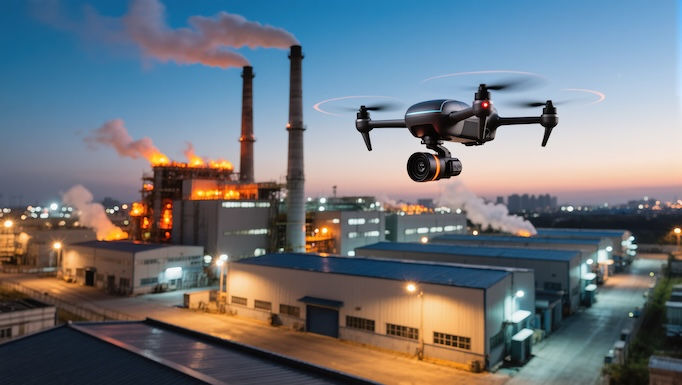
The maintenance and inspection of critical infrastructure—such as power grids, wind turbines, and bridges—historically demanded high-risk manual labor and significant operational downtime. Drones have fundamentally decoupled asset management from physical hazard by enabling autonomous structural audits. Utilizing thermal imaging and artificial intelligence, these aerial vehicles rapidly scan vast infrastructure networks for structural fatigue, gas leaks, or thermal anomalies without requiring system shutdowns. In the wake of extreme weather events, utility companies deploy autonomous fleets to survey grid damage instantly. This expedites resource allocation and minimizes the economically crippling duration of industrial power outages.
Unleashing Autonomous Real Estate and Construction
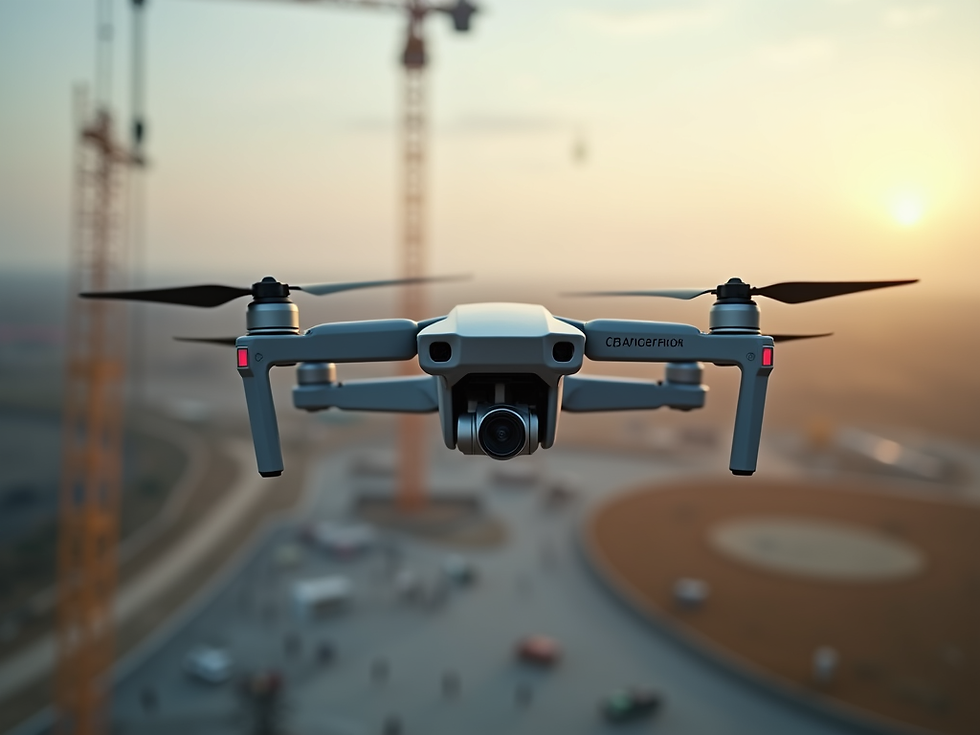
The construction and real estate industries rely heavily on precise spatial data and visual validation, making them ideal beneficiaries of drone integration. Drones conduct rapid aerial surveys to generate highly accurate three-dimensional point clouds and digital twins of construction sites. Project managers leverage this data to verify grading, monitor material inventory, and prevent costly architectural discrepancies. In commercial real estate, high-fidelity aerial documentation provides institutional investors with comprehensive site analyses, which accelerates the due diligence process and mitigates transactional risk.
The Economic Horizon
We are rapidly moving past the point where drones are just a novelty. As regulatory bodies establish safer, standardized frameworks for Beyond Visual Line of Sight (BVLOS) flights, commercial airspace is opening up like never before. The businesses adopting aerial automation today are securing a massive competitive advantage. They enjoy lower operational costs, drastically reduced carbon footprints, and unprecedented speed.
Europe, for example, is deploying its U-space drone traffic management system to build the digital infrastructure required for dense, automated commercial airspace.
For enterprise organizations, the adoption of aerial automation yields a distinct competitive advantage marked by minimized operational risk, reduced carbon emissions, and enhanced capital efficiency. As corporate reliance on autonomous technology deepens, the organizations that proactively integrate these systems into their core strategies will dictate the future velocity of global commerce.
For questions or information on how drones can benefit you or your enterprise, contact Blackbird Drone Ops for all your aerial data acquisition needs.


Comments